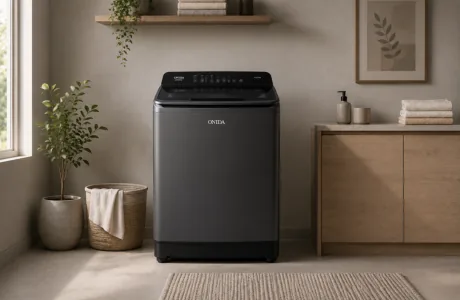

If you've been shopping for a washer machine in India recently, you've likely seen the term "single tub washing machine" and wondered how it differs from the twin tub models that have been common in Indian homes for years. The difference is more important than it appears. A single tub washing machine washes, rinses, and spins all in one drum. In contrast, a twin tub separates these tasks into two compartments. For buyers looking for small washing machines, compact apartments, or simply a simpler laundry process, understanding this difference is the first step to making the right choice. At Onida, we've created washer solutions for various Indian households, and we know that the right tub setup can significantly improve daily convenience.
In this blog, Onida explains what a single tub washing machine is, how it works, its real-world benefits and drawbacks, and whether it's the right washer machine for your home. We'll also compare it with twin tub washing machines, so you have a clear perspective before you spend any money.
A single-tub washing machine uses a single drum to complete the entire laundry cycle, washing, rinsing, and spinning without needing to transfer clothes between compartments. This differs from semi-automatic twin tub machines, which use a separate spin tub next to the main wash tub.
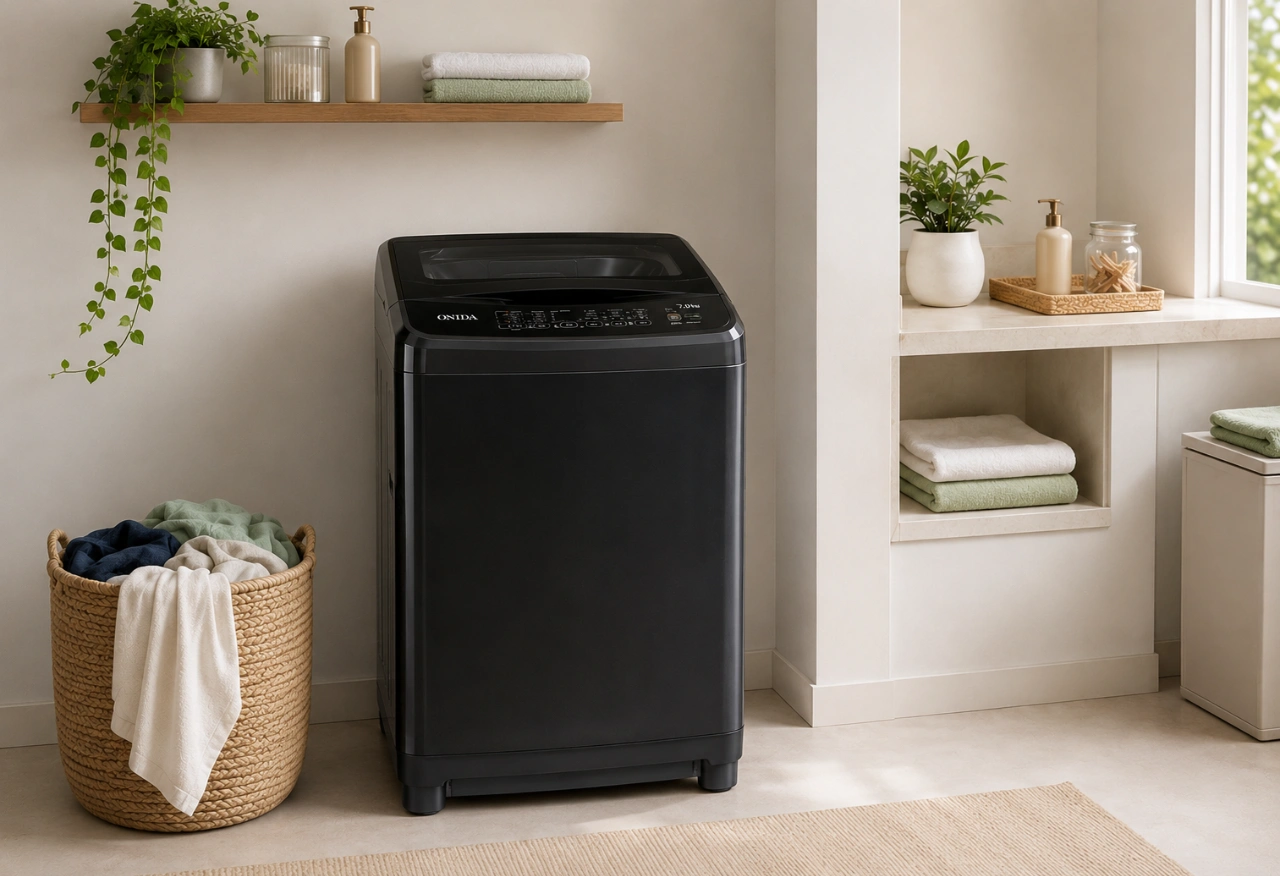
Single tub washing machines fall into two main categories: fully automatic top-load and fully automatic front-load. In both cases, the single drum does all the work automatically once you've loaded your clothes, added detergent, and chosen a program. There is no manual water filling, no mid-cycle tub transfer, and no separate drain management.
For buyers looking for a washer machine that only washes, meaning a machine focused purely on washing without built-in drying, a single tub fully automatic top load model is usually the most affordable and available option in India, with prices starting around ₹18,000 for a branded 6 kg model.
A single-tub washing machine is often a fully automatic model, offering the most hands-free laundry experience at its price point. Onida's single tub washing machine range combines automated cycle management, BEE-rated motors, and voltage protection in capacities suited to Indian household sizes.
The single drum in a single tub washing machine performs three functions in sequence and automatically:
Washing: Water enters through an inlet valve, the drum fills to the selected level, and an agitator or impeller moves the clothes through the detergent solution to loosen and remove dirt.
Rinsing: The dirty water drains out, and fresh water is filled one or more times to rinse the detergent from the fabric. Most single tub washing machines automatically run 2 to 3 rinse cycles.
Spinning: The drum rotates at high speed, typically 700 to 1,400 RPM, depending on the model, to remove water from clothes before you take them out. More advanced models include variable spin speeds suited for delicate and heavy fabrics.
This complete cycle takes between 30 and 60 minutes, depending on program selection, load size, and water temperature. The key advantage of a single tub design is that the entire process runs unattended. You load once, press start, and come back to dry clothes ready for the line.
Onida's single tub washing machine models include multiple wash programs, from quick wash cycles for lightly soiled clothes to intensive cotton cycles for heavily soiled items, giving users meaningful control without manual intervention.
Before deciding which is right for your home, it's helpful to understand where these two designs differ.
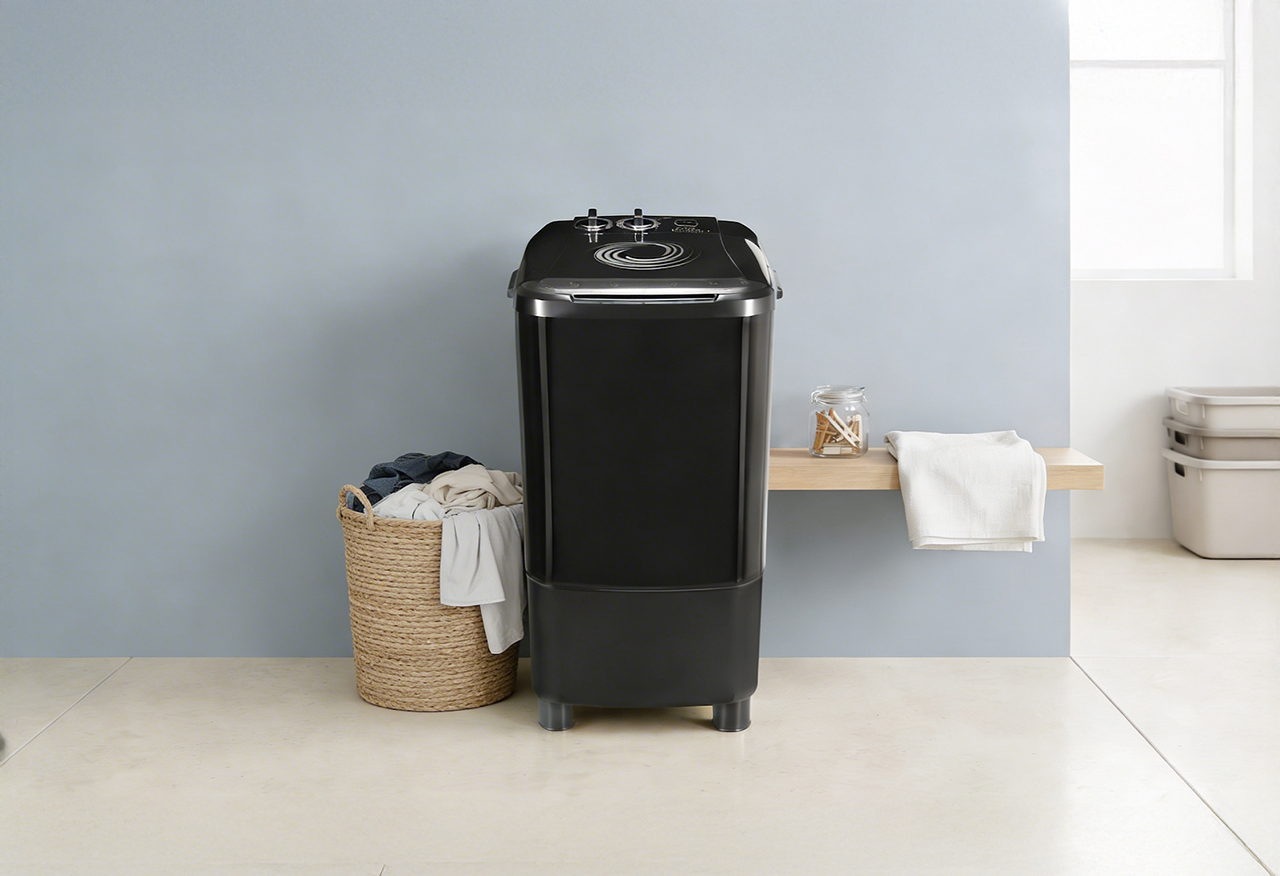
A twin tub washer, the semi-automatic washing machine most Indian families grew up with, splits the wash and spin functions into two separate tubs. You fill the larger wash tub manually, run the wash cycle, and then transfer the wet clothes by hand into the smaller spin tub. This gives you precise control over water use and works well with stored or overhead tank water. However, it requires your presence and attention throughout.
A single-tub washing machine automates the entire process in a single drum, requiring a direct water inlet connection and a consistent power supply, while eliminating every manual step.
| Factor | Single Tub Washing Machine | Twin Tub Washing Machine |
| Operation | Fully automatic, one-touch | Semi-automatic, manual transfer |
| Tub configuration | One drum (wash + spin) | Two tubs (wash tub + spin tub) |
| Manual effort | None | High (fill, transfer, drain) |
| Water supply needed | Direct inlet (consistent supply) | Stored or bucket water works |
| Water consumption | 45–180 litres per cycle | 80–120 litres per cycle |
| Price range (India) | ₹18,000–₹65,000+ | ₹8,000–₹18,000 |
| Electricity use | 400–2,000W | 300–500W |
| BEE star rating | 3–5 star | Not applicable |
| Wash programs | Multiple (auto-selected) | Basic (manual timer) |
| Portability | Low (fixed installation) | Higher (no plumbing needed) |
| Ideal for | Urban homes, consistent supply | Irregular supply, tight budget |
| Capacity range | 6–10 kg | 6–10 kg |
| Fabric care | Excellent (sensor-based cycles) | Good |
The single tub washing machine is better for convenience and wash quality, while the twin tub offers more flexibility with water supply and lower upfront costs. For households choosing between the two, the main deciding factor is almost always whether the home has a reliable direct water connection.
Single-tub washing machines offer several practical advantages, making them the preferred choice for urban Indian households.
Complete automation: Once loaded, no supervision is needed. This is particularly important for working households where laundry needs to run during office hours or overnight.
Better fabric care: Sensor-driven cycles adjust water levels, agitation intensity, and spin speed based on load size and fabric type, reducing wear on clothes compared to fixed-timer manual washing.
Space efficiency: A single tub model takes up less floor space than a twin tub of the same capacity since there is only one drum instead of two side-by-side tubs. This is a significant advantage in compact Indian apartments.
Wash program variety: Cotton, delicate, quick wash, synthetics, and heavy-duty cycles are standard on most fully automatic single tub models, allowing you to treat different fabrics correctly without guesswork.
BEE efficiency: Inverter-motor single tub washer machines carry BEE ratings of 4 stars and 5 stars. They consume 30–40% less electricity than non-inverter models of the same capacity, leading to substantial savings on monthly electricity bills.
Can handle bulky items: A single tub washer with a capacity of 7.5 kg or higher can wash bulky items like curtains, blankets, and bed covers in a single cycle. This is more challenging for a twin tub's divided capacity.
The ability to wash bulky items in a single automated cycle is one of the most overlooked advantages of a single tub washing machine for Indian families. Onida's fully automatic single tub washing machine range is available across 6.5 kg, 7 kg, 7.5 kg, and higher capacities. Check out the full range at onida.com/washing-machines to find the right size for your household.
A well-maintained single tub washing machine from a trusted brand usually lasts 8 to 12 years with regular use. The motor, drum bearings, and inlet valve are the components most likely to wear over time.
To extend their lifespan:
Clean the drum monthly: Run an empty hot wash cycle with a cup of white vinegar or a drum cleaner to remove detergent buildup, hard water deposits, and bacteria. This is crucial in Indian cities with hard water supply.
Clean the inlet filter: The mesh filter on the water inlet valve collects sediment and should be rinsed every two to three months, especially in areas with dirty tap water.
Don’t overload: Running the machine consistently above its rated capacity strains the motor and drum bearings. For a 7 kg machine, keep loads between 5.5 and 7 kg for optimal performance and longevity.
Use the right amount of detergent: Too much detergent leaves residue in the drum and the pump filter, reducing cleaning efficiency and potentially causing blockages over time.
Voltage protection: In Indian cities where power fluctuations are common, choose a washer machine with built-in stabiliser-free operation. Onida's single tub washing machine models are designed to operate across a wide voltage range without needing an external stabiliser, protecting the motor from surge damage.
With the right maintenance routine, a single tub washer is a genuinely long-term appliance, not just a short-term convenience. Review Onida's washing machine care guidance and model specifications at onida.com to make an informed decision before you buy.
A single tub washing machine is ideal for urban households with a steady water supply, those who prefer fully automated laundry, and those on a budget, starting at ₹18,000. It fits working families who cannot monitor a semi-automatic machine mid-cycle, households in high-rise apartments with standard plumbing, and buyers looking to wash various fabrics, including delicates and bulky items, without needing to manage programs manually.
Small washing machines in the single tub fully automatic category, especially compact 6 kg models, also suit single-person households or couples in studio or 1BHK flats where space and daily laundry volume are limited. A small portable washing machine with a single tub design provides the additional benefit of a smaller footprint while remaining fully automated.
If your home has an inconsistent water supply or if your budget is under ₹18,000, a twin tub semi-automatic is a more practical option. Onida's range covers that category well.
The single tub washer is a good long-term investment for any Indian household where infrastructure allows for it, and convenience is a priority. Explore Onida's complete range at onida.com/washing-machines.
A single-tub washing machine automates the entire wash, rinse, and spin cycle in a single drum, with no manual intervention. It saves time and manages a wider range of fabrics through automatic program selection. It fits into smaller spaces than twin tub machines and, with an inverter motor, uses 30-40% less electricity than non-inverter models. It is the most convenient option for households with a direct water connection.
A single tub washing machine is better for urban homes with a consistent water supply and a need for full automation. A twin tub is more suitable for homes with intermittent water supply or a budget under ₹18,000. The single tub excels in convenience, fabric care, and program variety; the twin tub offers flexibility and lower initial costs. Your water supply situation is the best guide to which machine is best suited to your home.
A 6 kg single tub washing machine is the right size for a single person. Given typical daily laundry volumes of 1-2 kg, a 6 kg drum can handle three to four days' worth of clothing in one cycle. It also has enough capacity for occasional bulky items, such as bed linen. Onida offers 6 kg and 6.5 kg models that fit well in single-occupancy flats and studio apartments.
Yes, a single tub washing machine with a capacity of 7 kg or more can wash bulky items, including curtains, blankets, and double bed covers, in a single cycle. Most models have a dedicated heavy-duty or bedding program that adjusts water levels and agitation. A twin tub washing machine is less suited to bulky items because capacity is divided between two tubs.
A washing machine only washer refers to a machine that washes and spins clothes but does not include a built-in tumble dryer. Most single tub washing machines in India fall into this category. They complete the full wash-rinse-spin cycle, but the clothes are removed damp and air-dried. Models with a built-in dryer function (washer-dryer combos) are available but cost significantly more, starting at about ₹45,000.
Run an empty drum clean cycle monthly. Most single-tub washing machines have a dedicated drum-clean program that uses white vinegar or a specific drum cleaner to remove detergent residue and hard water deposits. Clean the inlet filter every two to three months by removing and rinsing the mesh screen. Wipe the door seal and detergent drawer after each use to prevent mould buildup, which is common in high-humidity Indian cities during the monsoon season.



Please dispose of e-waste and plastic waste responsibly.
For more information or e-waste pick up, please call 7490 9555 55 or
click here for more details.