
You’ve decided it’s time for a new washing machine. Then comes the question that turns a simple purchase into a maths problem: 6.5 kg, 7 kg, 8 kg, 9 kg or even bigger?
Washing machine capacity is one of the most important specifications to get right. Choose too small a machine and you may find yourself running multiple loads or regularly squeezing in more clothes than the drum can comfortably handle. Go much larger than your household needs and you may be paying for capacity you rarely use.
The right capacity isn’t determined by family size alone. How often you wash, whether you prefer small daily loads or bigger weekend washes, and how frequently you wash bedsheets, towels and other bulky items all matter.
Here’s how to choose a washing machine capacity that actually fits your household.
A washing machine’s capacity, measured in kilograms, refers to the approximate weight of dry laundry the machine is designed to handle in a load.
So, a 7 kg washing machine is designed to accommodate up to approximately 7 kg of dry laundry under the appropriate conditions. It doesn’t mean the machine itself weighs 7 kg, and you don’t need to weigh every basket of clothes before washing.
The capacity figure is best used as a guide to compare machines and understand how much laundry they are designed to handle.
A higher capacity generally means you can wash more laundry in a load. But bigger isn't automatically better.
The goal is to find enough capacity for your normal laundry without routinely overloading the machine or buying far more capacity than you'll realistically use.
Capacity affects more than how many clothes fit inside the drum.
If your washing machine is regularly overloaded, clothes have less room to move during the cycle.
Water and detergent need to circulate through the load, and clothes need enough space to move for effective washing. Packing the drum too tightly can compromise that process.
A machine that's too small for your household can also mean:
If you're already struggling with clothes not coming out as clean as expected, read How to Get Better Wash Results from Your Washing Machine for practical ways to improve loading, detergent use, sorting and machine care.
Buying the biggest washing machine available isn't necessarily the solution either.
If most of your loads are small, you may rarely use the additional capacity you've paid for.
Instead, think about what a normal week of laundry looks like in your home. That's a better starting point than buying based on the occasional giant pile.
Family size is useful as a starting point, but it shouldn't be treated as a fixed rule.
Two families of four can generate very different amounts of laundry.
One may wash workwear and school uniforms almost every day. Another may run two larger loads over the weekend. A household with young children may generate more laundry than a larger household of adults.
As a broad guide:
| Household | Capacity to Consider | Typical Use |
| 1–2 people | Around 6.5 kg | Smaller, regular loads |
| 2–3 people | Around 7 kg | Everyday household laundry |
| 3–4 people | Around 7.5–8 kg | Regular family loads |
| 4–5 people | Around 8–9 kg | Larger loads, towels and bedding |
| Larger households | 9 kg and above | High laundry volume and bulky loads |
These aren't hard limits. Use them to narrow your search, then adjust based on how your household actually washes.
Onida's washing machine range covers multiple capacities across fully automatic and semi-automatic options, giving households room to choose according to laundry volume and preferred format.
A 6.5 kg washing machine can make sense for individuals, couples and smaller households that wash relatively frequently.
It can also work for households that prefer running smaller loads instead of letting laundry accumulate for several days.
The key question isn't simply, "How many people live here?"
Ask:
How much laundry goes into one typical load?
If you're washing everyday clothes for one or two people and handling bedsheets or towels separately, 6.5 kg may be sufficient.
If the laundry basket regularly overflows before wash day, moving up a capacity may make everyday use more comfortable.
Onida offers 6.5 kg options within its portfolio, including the Fabric Care 6.5 KG 5 Star Fully Automatic Top Load Washing Machine, giving smaller households an option to consider within this capacity.
A 7 kg washing machine sits in a useful middle ground for many smaller families.
It provides more room than a 6.5 kg machine without moving into the larger capacities intended for heavier household laundry.
For a household of two or three people, 7 kg may be a practical option if washing happens regularly.
It may also suit a family of four that runs smaller, more frequent loads rather than combining several days of laundry into one wash.
But family size alone doesn't settle the question.
If those four people include two young children, sportswear, school uniforms and multiple towel loads every week, a larger capacity may be more practical.
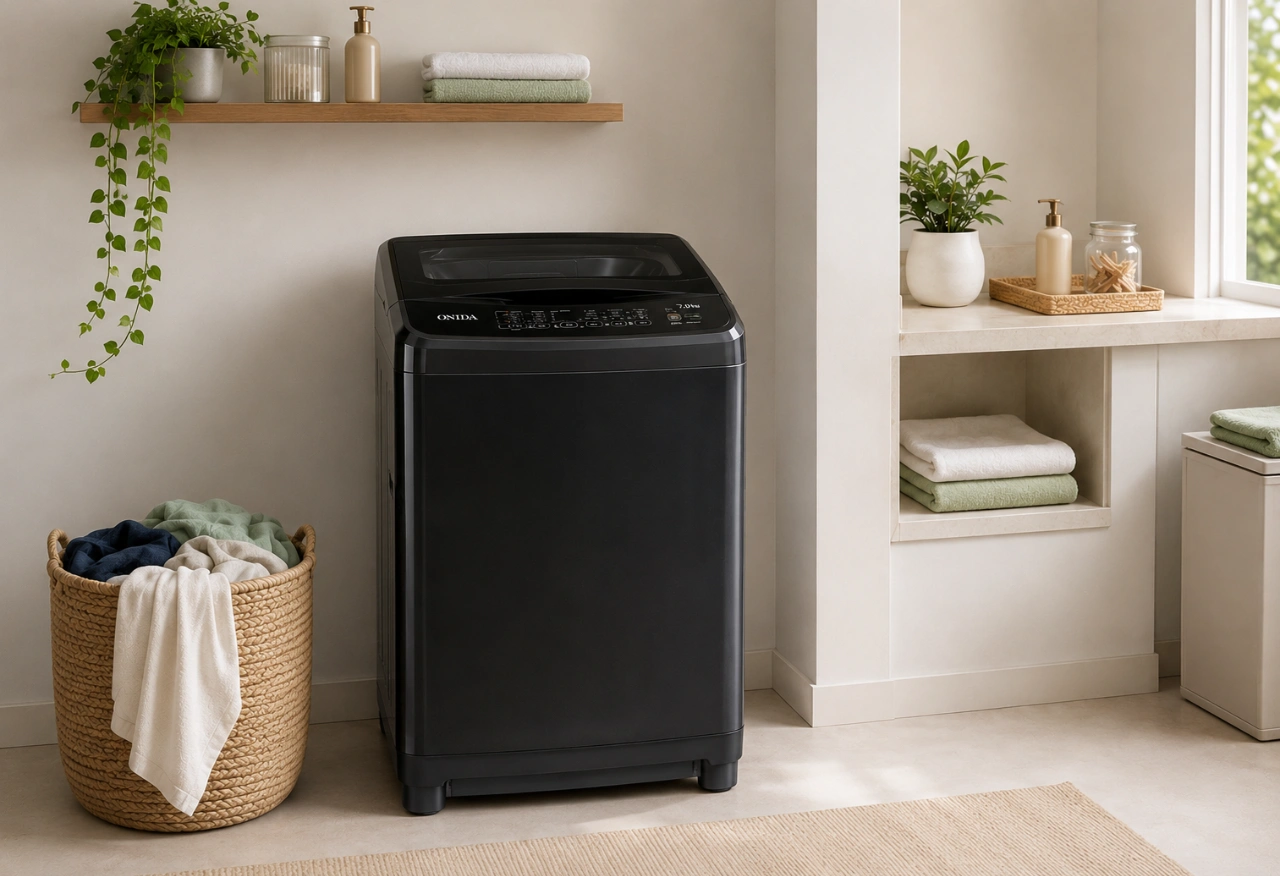
For households considering this capacity, Onida's range includes the Crystal 7 KG 5 Star Fully Automatic Top Load Washing Machine.
As household laundry volume grows, the additional space offered by a 7.5 kg or 8 kg washing machine can become useful.
These capacities can suit families that:
An 8 kg washing machine can be particularly useful for a family that sits between ordinary daily loads and genuinely heavy laundry requirements.
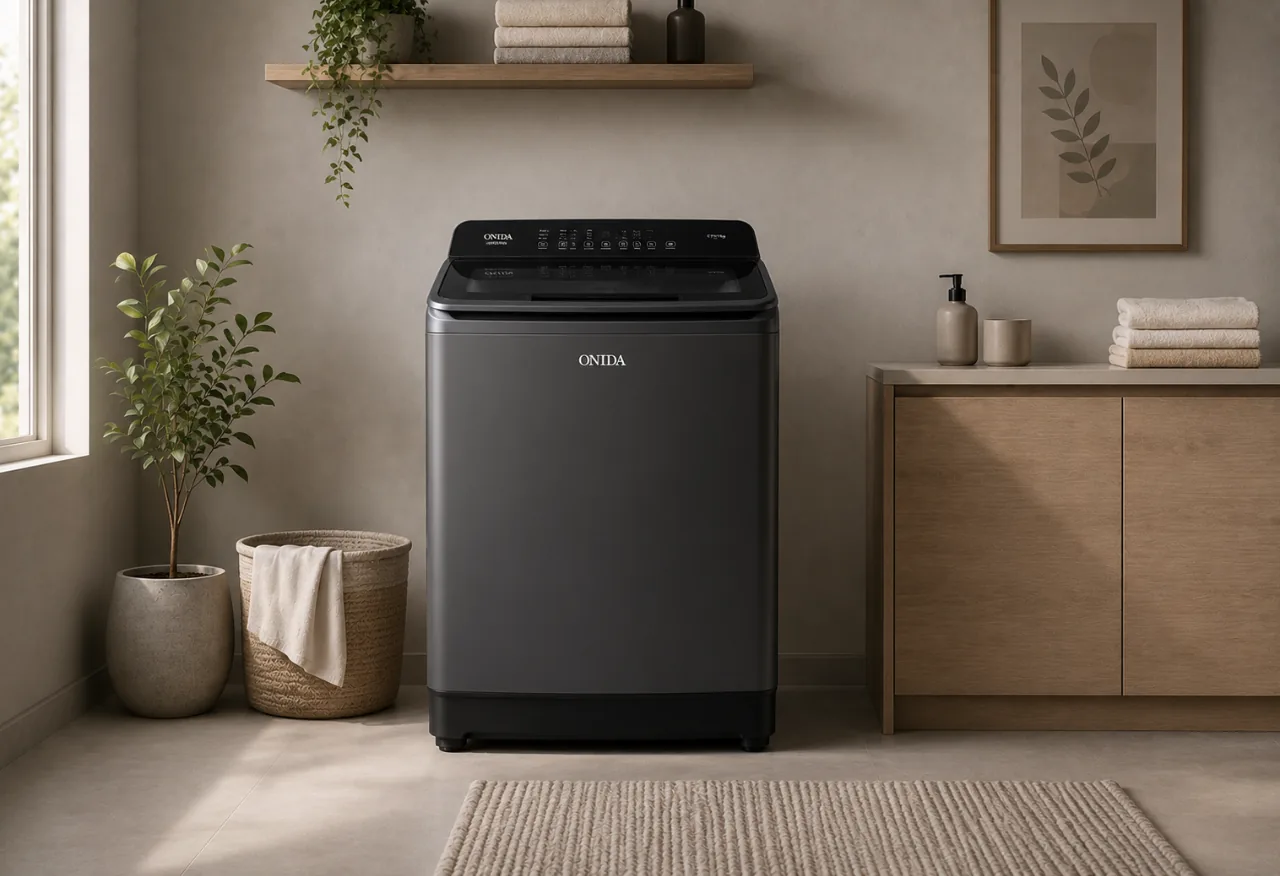
For example, the Onida Grandeur 8 KG 5 Star Sensomatic Fully Automatic Top Load Washing Machine provides an option at the 8 kg capacity level.
Select Onida fully automatic top load models also include Sensomatic Technology, which detects laundry weight and determines the water requirement for the load.
Capacity tells you how much the machine is designed to handle. Features like load sensing can then help the machine manage different load sizes more conveniently.
A 9 kg washing machine or larger capacity starts making more sense when laundry volume is consistently high.
That could mean:
Larger capacities can also be helpful when bulky laundry is a regular part of your routine.
But don't jump from a 6.5 kg machine to a very large one simply because you occasionally wash a blanket.
Think about the loads you run every week, not the unusual load you run twice a year.
For households that regularly handle larger laundry volumes, the Onida semi-automatic washing machine range includes multiple capacity options to explore.
This is where capacity guides often become too simplistic.
Imagine two households.
Household A: Four people, laundry runs almost every day.
Household B: Four people, laundry happens primarily on Saturday and Sunday.
The number of people is identical. The amount going into each load may be completely different.
If you wash frequently, a smaller capacity may comfortably handle your routine.
If you prefer collecting laundry and washing larger batches, extra capacity becomes more useful.
Before choosing a machine, think about your current habits:
Those answers can tell you more than household size alone.
A pile of T-shirts and a pile of towels may look similar in the laundry basket, but they behave very differently once wet.
Towels, jeans, bedsheets, curtains and other heavy fabrics absorb more water and need enough room inside the drum to move.
If bulky items are part of your regular laundry routine, choosing a little more capacity can give you greater flexibility.
This doesn't mean every large household automatically needs the highest-capacity washing machine.
It means you should consider what you're washing, not just how many garments you're washing.
If your weekly routine includes bedsheets, multiple bath towels and heavier clothing, factor that into your capacity decision.
A washing machine having a certain rated capacity doesn't mean every load should be packed as tightly as possible.
Clothes need room to move.
If you're pushing laundry down to squeeze in another shirt or struggling to close the lid comfortably, splitting the load is usually a better idea.
Regular overloading can affect wash quality, and it may be a sign that your current washing machine capacity no longer matches your household.
This is also why buying purely according to today's needs can be shortsighted.
If your household is likely to grow or your laundry volume is already increasing, choosing a little headroom may make sense.
Just don't turn "a little headroom" into buying the largest machine on the shop floor.
Capacity matters regardless of whether you're choosing a fully automatic washing machine or a semi automatic washing machine.
The difference is mainly in how you use the machine.
A fully automatic washing machine handles washing and spinning as part of an automated process, making it useful for households that prioritise convenience.
Onida's fully automatic top load washing machine range includes different capacities for households looking for a more automated washing routine.
A semi-automatic washing machine uses separate wash and spin tubs and requires more manual involvement.
The Onida semi-automatic washing machine range provides options across multiple capacities for households that prefer this format.
So first decide what fits your routine:
Do I want greater automation, or do I prefer more manual control over the washing process?
Then choose the appropriate capacity within that format.
Once you've narrowed down the right capacity, don't stop there.
Two washing machines with the same kilogram rating can offer very different features and experiences.
Different programs can help you match the wash to everyday clothes, delicate fabrics, heavier laundry or quick loads.
If your household runs the washing machine frequently, energy efficiency becomes increasingly relevant. Compare the energy rating of the models you're considering rather than looking at capacity alone.
Features that adapt water levels according to laundry load can make everyday operation more convenient.
Select Onida fully automatic top load models feature Sensomatic Technology, designed to sense laundry weight and determine the water required for the cycle.
The way clothes move through the drum can affect fabric care as well as cleaning.
Select Onida models feature a Hexa Crystal Drum, designed to support effective washing while being gentle on fabrics.
Depending on your household, quick-wash options, lint filtration, air-dry functionality and different wash programs may be just as relevant as capacity.
Capacity gets you into the right neighbourhood. These features help you choose the right house.
If you're still deciding between two capacities, use this process.
Step 1: Start with household size.
Use the family-size guide to identify a reasonable starting range.
Step 2: Look at your laundry frequency.
Frequent small loads may require less capacity than large weekend batches.
Step 3: Consider bulky items.
If towels, bedding and heavy clothing appear regularly, allow additional room.
Step 4: Look at your current machine.
Are you constantly overloading it? Running two cycles when you'd prefer one? Or rarely filling it?
Your current laundry routine is valuable evidence.
Step 5: Choose the format.
Decide between fully automatic and semi-automatic based on convenience, control and your washing routine.
Step 6: Compare features within the capacity you've chosen.
Now look at energy efficiency, wash programs, water management, drum design and other features.
That approach is far more useful than simply asking for the "best washing machine for a 4 person family" without considering how that family actually handles laundry.
The right washing machine capacity isn't about buying the biggest drum you can afford.
It's about finding the capacity that fits your household without making everyday laundry harder than it needs to be.
A smaller household that washes frequently may be perfectly comfortable around 6.5 or 7 kg. A family handling larger loads may benefit from 7.5 or 8 kg. Larger households and homes dealing with substantial weekly laundry may want to explore 9 kg and above.
Use family size as your starting point, then adjust for washing frequency, bulky laundry and the way you actually use the machine.
Once you know the capacity you need, explore the complete Onida washing machine range to compare available capacities, formats and features.
There isn't one capacity that works for every family of four. Around 7.5–8 kg can be a useful starting point, but washing frequency and the amount of bulky laundry matter. A family washing daily may need less capacity than one doing larger weekend loads.
For many couples or two-person households, 6.5 kg can be sufficient, particularly when laundry is washed regularly in smaller loads. Consider a larger capacity if you frequently wash bulky items or prefer fewer, larger loads.
It can be, particularly if the household runs smaller loads frequently. If laundry is accumulated for several days or includes a lot of towels, bedding or children's clothes, a larger capacity may be more convenient.
An 8 kg washing machine is designed to handle approximately 8 kg of dry laundry under appropriate washing conditions. The rating helps indicate how much laundry the machine can accommodate in a load.
No. Extra capacity is useful when your household genuinely needs it, but buying significantly more capacity than you regularly use isn't automatically beneficial. Match the machine to your normal laundry volume and habits.
If you're frequently packing the drum tightly, splitting normal laundry into multiple loads or struggling to wash everyday towels and bedding comfortably, your current capacity may no longer suit your household.



Please dispose of e-waste and plastic waste responsibly.
For more information or e-waste pick up, please call 7490 9555 55 or
click here for more details.