
Choosing a fixed-speed AC during hot weather and tight budgets demands clear choices. These dependable units deliver consistent cooling without the extra features of more costly models. Unlike inverters, which adjust speed for efficiency, non-inverter AC models operate at full power when switched on. They are ideal for short periods where simplicity is essential.
Onida helps you select the right fixed-speed AC by comparing non inverter ac 1.5 ton and 1-ton models based on your lifestyle, room size, and long-term value. This blog offers practical advice for making informed decisions across India's diverse climates.
Fixed-speed AC, or non-inverter AC, is suitable for budget-conscious buyers seeking simple cooling. Compressors operate at a constant speed and turn on and off to regulate temperature. This setup is ideal for occasional use, such as in guest rooms. A non-inverter AC 1 ton fits small spaces (up to 110 sq. ft), while a fixed-speed AC 1.5 ton comfortably cools 150 sq. ft.
Non-inverter ACs are known for their simplicity. They have lower initial costs (₹25,000-35,000 compared to over ₹40,000 for inverters). With fewer electronic components, repairs are cheaper (₹3,000 versus ₹10,000 for PCB repairs). Cooling begins effectively, making them suitable for occasional use. However, frequent switching on and off can raise bills by 20-30% during longer operation periods. Inverters are suitable for regular use, whereas fixed-speed AC is more cost-effective and reliable for backup situations.
Match the capacity to the room size: use a non-inverter AC 1 ton for 100-120 sq. ft, and a fixed-speed AC 1.5 ton for 130-180 sq. ft. Oversizing wastes energy, while undersizing strains the system. Star ratings are important; a 3-star AC can save you 15% on bills compared to a 1-star model, thanks to better compressors. Copper condensers excel in heat transfer and resist rust better than aluminium. A stabiliser-free range (145-260V) performs well with Indian power grids. Onida's non-inverter AC 1.5-ton features an anti-corrosive Blue Fin and turbo cooling. Concentrate on dust filters and sleep modes to ensure you have an AC with the lowest electricity bill.
A non-inverter AC 1-ton effectively cools small bedrooms and uses 900-1100W, ideal for low usage. A fixed-speed AC 1.5 ton suits living rooms and draws 1100-1400W in hotter areas.
Buy fixed-speed ACs with rotary compressors for durability, and a voltage range of 150-260V to prevent tripping.
| Capacity | Room Size | Power Draw | Best For |
| 1 ton | 100 sq. ft | Low | Bedrooms |
| 1.5 ton | 150 sq. ft | Medium | Halls |
- Affordable entry (₹28,000 on average).
- Quick cooling down
- Simple to service
- Higher energy bills during extended runs
- Louder operation
- Shorter lifespan (8-10 years)
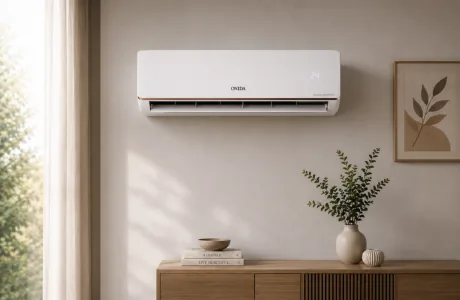
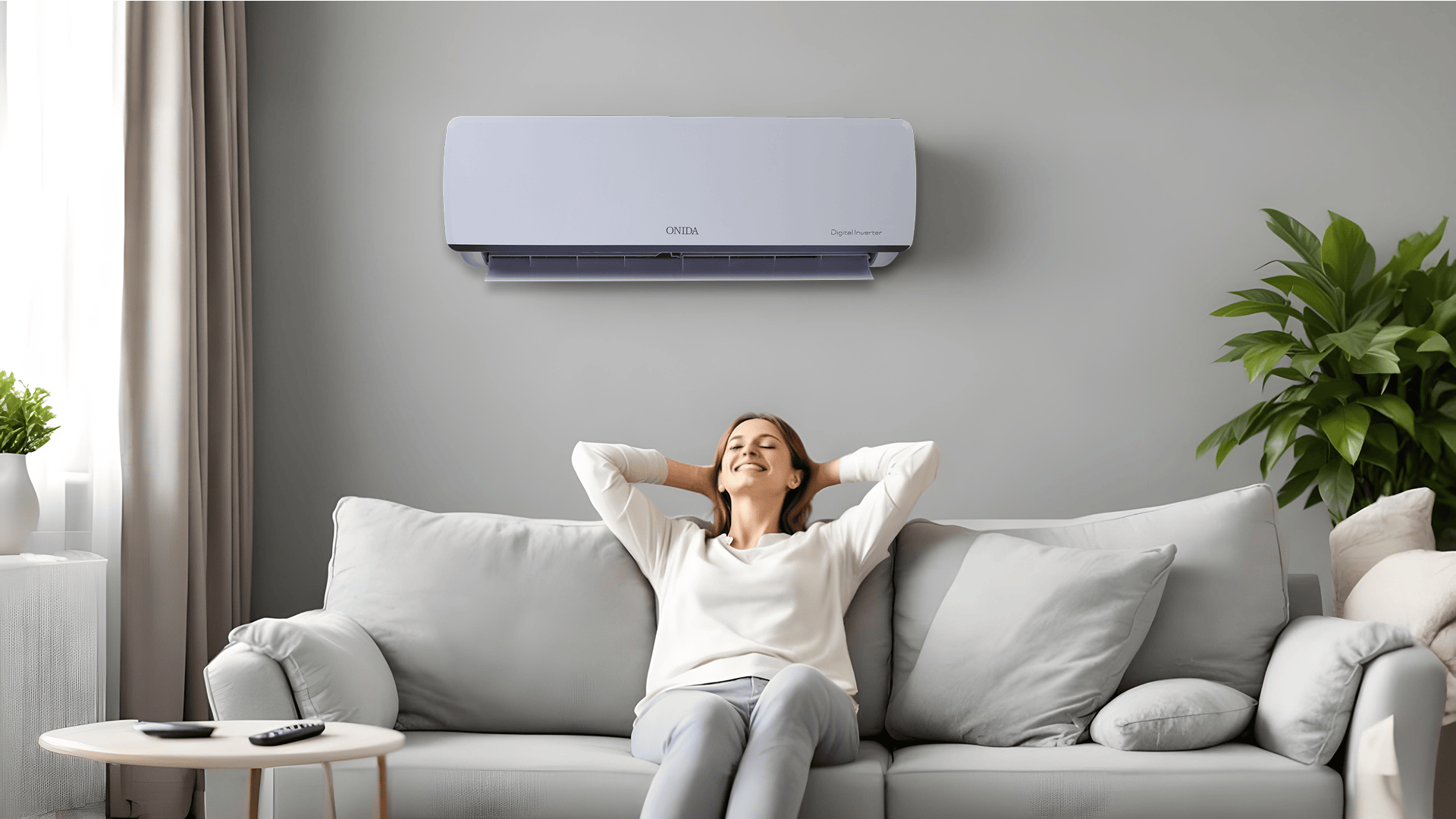
Onida's non-inverter AC 1-ton offers 3-star efficiency, turbo mode, and self-cleaning for ₹29,000. The non-inverter AC 1.5-ton model features a 4-way swing for ₹35,000, and both models are equipped with copper components.
Compared to inverters, fixed-speed AC avoids PCB costs but cycles more frequently. Onida’s stabiliser-free models perform well.
Non-inverter ACs are ideal for budget-conscious buyers and short-term use; inverters offer better efficiency and a longer lifespan.
Choosing the best fixed-speed AC for your home involves focusing on durability, proper sizing for your room, and selecting models with high energy efficiency ratings, as they generally consume more power than inverter models.
Yes, Fixed-speed ACs can be a good choice for budget-conscious buyers, as they are affordable and easy to repair, making them suitable for occasional cooling.
Onida's 3-star non-inverter AC, 1.5-ton, offers a good balance of cost and performance.
Investor Tip: Short-term spaces benefit from fixed-speed savings. </span
Should I buy a fixed-speed AC or an inverter AC on a budget?
On a strict, immediate budget, a fixed-speed AC is better because of its lower upfront costs. However, if you use the AC regularly, an inverter AC is better in the long term, offering 30-50% electricity savings and quieter, more durable performance. Choose based on usage frequency: high use justifies an inverter's premium.
Cost is lower initially; long-term savings depend on usage. Short bursts favour fixed-speed AC, while daily use leans towards inverters.



Please dispose of e-waste and plastic waste responsibly.
For more information or e-waste pick up, please call 7490 9555 55 or
click here for more details.