
As temperatures rise across India, your inverter split AC becomes an essential part of comfortable living, delivering consistent cooling with impressive energy efficiency. Proper maintenance not only maximises its performance but also protects your investment against early breakdowns and rising electricity bills.
In this comprehensive guide, Onida discusses proven strategies for maintaining your inverter split AC, from daily routines to professional servicing schedules tailored to Indian conditions. Whether you own a 1.5-ton 5-star inverter AC or a 2-ton inverter split AC, these insights, based on manufacturer expertise and real-world usage, will help you optimise efficiency and extend its lifespan.
An inverter split AC system adjusts cooling power based on room temperature, using a variable-speed compressor, unlike fixed-speed non-inverter models. This technology reduces energy consumption by 30-50% and lessens compressor wear, potentially increasing lifespan to 12-15 years with proper maintenance. Inverter air conditioner units thrive in India's hot, humid climates, maintaining consistent temperatures without the harsh on-off cycles that afflict traditional inverter AC systems.
Neglecting maintenance, however, leads to dust buildup, refrigerant leaks, and reduced efficiency, which account for 40% of service calls in urban homes (Bureau of Energy Efficiency data, 2025). The best inverter ACs in India, such as Onida models, perform well when filters are clean and coils are free of grime, ensuring sustained ISEER ratings above 5.0 and a reputation as the best inverter air conditioners in India. Regular upkeep results in lower bills, potentially saving up to ₹5,000 annually on a 1.5-ton split AC inverter, and improves air quality for allergy-prone families.
Is an inverter AC better than a normal AC? Absolutely, yes, for most households. Inverter air conditioners use less power by intelligently adjusting the compressor speed, achieving 40% greater efficiency according to BEE star ratings. In contrast, non-inverter units cycle on and off abruptly, causing energy spikes and more wear on components.
Lifespan favours inverter split AC too: variable operation minimises strain, resulting in over 10 years of service compared to 7-8 years for non-inverters. Noise levels drop to whisper-quiet 20-30 dB, making it ideal for bedrooms. For Indian summers exceeding 45°C, inverter air conditioners provide stable cooling without voltage fluctuations, which is crucial in areas with unreliable power supply.
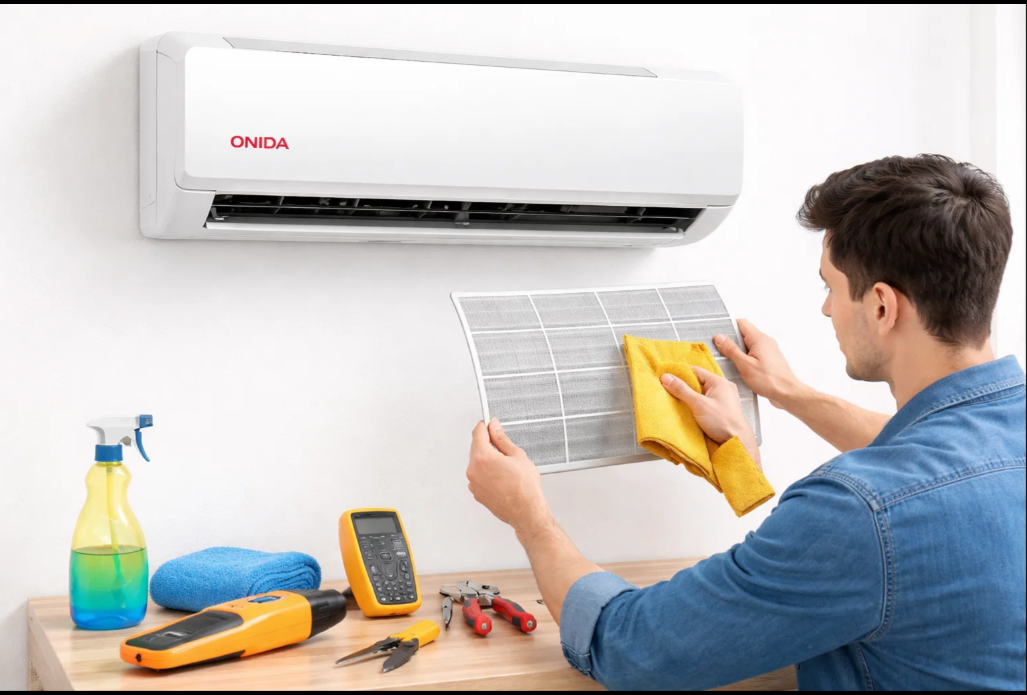
India's scorching heat requires careful maintenance of your inverter split AC. Begin by cleaning the AC dust filter regularly every 7-14 days during peak summer. Remove the filter (usually accessible from the front panel), rinse it under lukewarm water with mild soap, and ensure it is completely air-dried before reinstalling. Clogged filters increase power consumption by 15% and put additional strain on the compressor.
Operate at 24-26°C for optimal efficiency; lower settings overburden the inverter AC. Use timer functions to prevent overnight operation, and employ ceiling fans to circulate air, reducing runtime by 20%. In dusty locations such as Delhi or Mumbai, position indoor units away from windows to limit ingress. For the best AC for a hot and humid climate, ensure a 6-inch clearance around the outdoor unit to allow unrestricted airflow.
Coils are the core of your 1.5-ton, 5-star inverter AC. Monthly, use a soft brush or vacuum with a brush attachment to remove surface dust from the indoor evaporator fins. Never use high-pressure water, as it can bend delicate lamellae. For more thorough cleaning, apply coil cleaner spray (pH-neutral), let it foam for 10 minutes, then rinse gently.
Outdoor condenser coils on a 2-ton inverter-split AC unit collect urban pollutants the fastest. Quarterly, switch off the MCB, and hose down the fins from inside out at low pressure (avoid kinking copper tubes). This restores heat exchange, enhancing the ISEER by 10-15%.
How often should a split inverter AC be serviced for a long life? Experts recommend twice-yearly service: before summer (March) and after the monsoon (October) for inverter-split AC units. Annual servicing is sufficient in milder regions, but India's extreme weather conditions require biannual checks to prevent 70% of failures caused by neglected refrigerant or drainage.
Technicians inspect compressor oil, recharge R32/R410A refrigerant (leaks reduce efficiency by 25%), and test capacitors. Wet servicing and high-pressure indoor coil wash remove embedded grime, while drainpipe flushing prevents the build-up of stagnation mould.
Unplug or switch off the MCB before any contact with the inverter AC. Check wiring for frays, replace remote batteries annually, and inspect the PCB for corrosion. Humid coasts speed up this process. Tighten terminal screws; loose connections cause 10% of trips.
Remove the front grille, soak the filter in a vinegar solution (1:10) for stubborn grease. Wipe the blower fan blades with a microfibre cloth. 1.5-ton 3-star inverter AC fans tend to harbour bacteria hotspots. Reassemble only when completely dry to prevent short circuits.
What maintenance is required for split inverter ACs in India? Prime the drain pan: pour vinegar weekly to dissolve algae, then flush with water. Snake the PVC drainpipe annually to clear blockages. Stagnant water causes leaks and odours.
Raise the condenser by 12-18 inches on stands to prevent flooding. Trim nearby foliage, as leaves can reduce airflow by 30%. Use a fin comb available online for ₹ 200 to straighten bent fins.
Leave gas handling to professionals, but monitor gas levels with gauges when available. Clean temperature sensors with isopropyl alcohol; dirty sensors can mislead the inverter air conditioner, leading to overcooling.
To significantly extend the lifespan of your split inverter AC, prioritise voltage stabilisation with a dedicated 4kVA servo stabiliser, which is essential for India's frequent voltage fluctuations, which can increase compressor stress by 30%. Apply quarterly anti-corrosive coatings, such as Bluefin or Gold Fin, to evaporator and condenser coils, especially in coastal areas where salt accelerates pitting. Professional application costs ₹1,500, but can prevent ₹15,000 in repairs. Activate self-cleaning cycles nightly on modern inverter AC units, which expel moisture to inhibit microbial growth, while scheduling compressor oil analysis every two years to detect wear early.
Utilise intelligent features such as sleep modes and i-feel sensors on the best inverter AC in India to reduce runtime by 15%, lowering thermal cycling. Raise the outdoor unit 18 inches on vibration-dampening mounts to prevent seismic vibrations and flooding, and install high-efficiency filters (PM2.5 rated) to cut dust ingress by 40%. These steps can extend the lifespan of your 1.5-ton 5-star inverter AC beyond 15 years, outlasting units without maintenance by five years.
Skipping filter cleaning reduces airflow by 25%, causing the compressor to work harder. What happens if a split inverter AC is not serviced regularly? Efficiency drops by 20-30% each year; refrigerant leaks occur (₹8,000 in repairs); and mould growth increases, posing health risks.
Ignoring outdoor dust causes overheating shutdowns; Indian monsoons worsen rust. Overloading with heat sources increases cycles, voiding warranties.
Which is the best 1.5-ton AC in India? Prioritise models with ISEER above 5.2, copper coils, and PM2.5 filters for polluted cities. Which AC should I buy for my home? Onida's inverter split AC line, with 5-in-1 convertible tech, suits 150 sq. ft rooms perfectly.
Best AC for a hot and humid climate: Stabiliser-free operation and anti-humidity modes excel. A 2-ton inverter split ac for larger spaces delivers even cooling coverage.
January-February (Winter): Perform monthly filter checks; run fan mode weekly to dry internal components.
March-April (Pre-Summer): Full professional service; check gas levels.
May to September (Peak Summer/Monsoon): Bi-weekly filters; monthly coil wipes; drain flushes.
October-November (Post-Monsoon): Deep cleaning and rust-proofing.
December (Off-Season): Quarterly run; cover outdoor unit.
Weak cooling often results from blocked filters or dirty evaporator coils in your inverter split AC. Start by switching off the MCB, removing the front panel, gently vacuuming the filter, and then rinsing it under lukewarm water. If ice forms on the coils, allow a 2-hour thaw (fan mode only), then check the drainage pipe for blockages by pouring vinegar down it. This is common in humid Indian homes where algae thrive. Persistent low airflow indicates a fan imbalance; wipe blades with a damp microfibre cloth and ensure the unit is not obstructed by curtains.
Odd noises or error codes, such as E1 (sensor fault), on inverter AC units usually resolve with a full power cycle: unplug for 10 minutes to reset the PCB. Rattling indicates loose panels or debris in the outdoor unit; inspect and tighten screws while clearing leaves from the condenser fan. For erratic remote response, replace the batteries first, then clean sensor contacts with isopropyl alcohol. If issues persist after these steps, contact a technician to prevent compressor strain and protect the lifespan of your 1.5-ton 5-star inverter AC.
For the diverse Indian climate, AC’s offering high-efficiency 5-star inverter split ACs that excel in rapid cooling, humidity control, and energy savings are generally considered the best. For extreme heat, superior AC brands such as Onida offer reliable, durable, and budget-friendly options with strong service networks.
Biannual servicing, weekly filter changes, and stabilising the voltage can increase the inverter split AC's lifespan by 40-50%.
For inverter split AC maintenance in India, the filter should be cleaned every two weeks, the coil must be washed monthly, and professional servicing should be conducted twice a year in humid tropical regions.
Inverter split AC should be serviced every 6 months in high-use situations and annually elsewhere to ensure long life.
Yes, regular servicing extends the life of inverter AC units by reducing wear; serviced units last over 5 years longer than unserviced units.



Please dispose of e-waste and plastic waste responsibly.
For more information or e-waste pick up, please call 7490 9555 55 or
click here for more details.