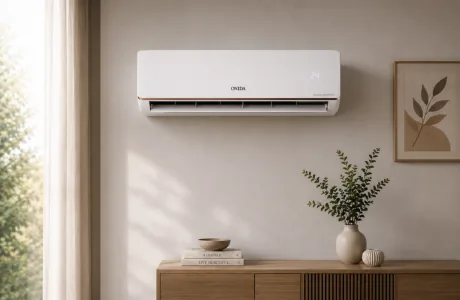


An inverter AC operates using variable speed compressors instead of the fixed-speed motors found in conventional air conditioners. The compressor adjusts its rotation speed based on the cooling demand inside your room. When your space reaches the desired temperature, the inverter AC reduces compressor speed rather than shutting it off completely. This continuous operation at lower speeds consumes significantly less electricity than the constant on-off cycling of traditional models. Most manufacturers, including brands with BEE (Bureau of Energy Efficiency) certification, now highlight this technology as a core feature. Traditional fixed-speed compressors work like a light switch—either fully on or fully off—while inverter technology mimics a dimmer switch with precise control over cooling output.
The variable speed compressor is the heart of inverter technology. When you first turn on your inverter split AC, the compressor runs at maximum capacity to cool the room quickly. Once the space approaches your target temperature, the compressor slows down and maintains that temperature using minimal power. According to HVAC engineering data, this variable operation can reduce energy consumption by 30-50% compared to fixed-speed models. The inverter converts AC power to DC power, then regulates the frequency sent to the compressor motor. This electronic control eliminates the energy spike that occurs when fixed-speed compressors repeatedly restart. In India's hot climate, where air conditioners run for extended periods, this difference translates directly to measurable savings on your electricity bill. The technology is now standard in most premium cooling units available in the market.
Modern energy efficient air conditioner 2025 units achieve superior performance through several integrated features. Smart sensors detect room temperature and occupancy patterns, adjusting cooling accordingly. Advanced filtration systems maintain airflow efficiency without increasing power draw. The compressor itself has improved materials and tighter tolerances, reducing internal friction losses. According to BEE standards, 5-star rated units consume approximately 0.90 kW per ton of cooling compared to 1.1 kW for 3-star models. This means a 5-star inverter AC running 8 hours daily uses roughly 500-600 units of electricity annually, while a 3-star fixed-speed model uses 900-1000 units for the same coverage. Manufacturers have also reduced refrigerant charge requirements and improved heat exchanger designs. When selecting the best ac for indian climate conditions, look for units rated 5-star by BEE and those with inverter technology as non-negotiable specifications. The initial cost is higher, but the operational savings recover the investment within 3-4 years for regular users.
The ideal room temperature for AC in summer balances comfort with energy efficiency. The Indian Bureau of Energy Efficiency recommends setting your thermostat between 24-26°C. Each degree you lower below 24°C increases energy consumption by approximately 6-8%, according to energy audits conducted by utility companies. A setting of 24°C represents an optimal point where most people feel comfortable and the compressor doesn't work excessively. Setting it to 20°C or below creates diminishing comfort returns while substantially raising your bill. For sleeping, the best thermostat setting for sleeping with AC is 26-27°C, as your body naturally tolerates slightly warmer temperatures during rest. The question of whether 24°C is the best temperature for air conditioner depends on your personal comfort threshold, but 24-26°C range suits most Indian households. Using a programmable thermostat allows you to automatically increase temperature during sleeping hours or when away from home. This single adjustment can reduce annual AC energy costs by 10-15% without sacrificing comfort.
How to balance AC cooling and power saving requires understanding your specific usage pattern. During peak heat hours (2 PM to 6 PM), maintaining 24°C is reasonable if you're working or staying active. For the evening and night, raising it to 26-27°C reduces strain on the system. The best cooling air conditioner in india combines inverter technology with smart scheduling features. Pre-cooling your space to 24°C an hour before peak heat arrives, then letting it drift to 26°C during intense afternoon heat, keeps you comfortable while reducing peak load. Avoid the common mistake of over-cooling because you feel momentarily warm—the system needs 20-30 minutes to stabilize room temperature. Doors and windows should remain closed while AC is running. Keeping them open forces the compressor to work harder, negating inverter efficiency benefits. Window coverings that block direct sunlight reduce the initial cooling load, allowing your inverter AC to maintain temperature with minimal compressor effort. Using ceiling fans at low speed helps distribute cool air without significantly increasing electricity draw.
Research from energy management studies shows direct correlation between temperature setting and power consumption. Setting your AC to 20°C instead of 24°C increases electricity usage by 24-32%. For example, if an inverter AC consumes 1.2 units per hour at 24°C, it may consume 1.5-1.6 units at 20°C. Over a month of 8-hour daily use, this represents 25-35 additional units. When calculating cost, multiply these extra units by your regional electricity tariff. In most Indian cities, this translates to Rs 200-400 monthly increase. The best ac to purchase in india should be evaluated not just on purchase price but on estimated annual operating cost. A unit that costs Rs 2000 more upfront but uses 25% less energy covers that premium within two years. Many users report that after inverter adoption, they can afford to run AC longer because hourly operating costs drop significantly. Energy-saving tips for using air conditioners efficiently include setting temperature once and resisting the urge to lower it further. The compressor adjusts automatically; additional temperature decreases don't cool faster but do waste energy.
The best ac for indian summer conditions is almost always an inverter model because of how peak temperatures behave. Indian summers see temperatures climbing to 45-50°C in some regions. Fixed-speed compressors run continuously at full capacity, consuming maximum power during these critical hours. Inverter compressors reach cooling capacity quickly, then maintain it efficiently. During the hottest parts of the day, the difference between 3.5-ton fixed-speed and 3.5-ton inverter units can exceed 2-3 kW in power draw. Electricity boards struggle during peak afternoon hours; inverter units reduce demand on the grid and help prevent brownouts. Over a summer season (May to September), the cumulative energy difference is substantial. The best ac in india for long-term value always includes inverter technology. Installation quality matters—poor insulation or incorrect sizing negates efficiency gains. Ensure your room is properly insulated and AC capacity matches the space. An AC that's too large for the room will short-cycle and waste energy; one that's too small will run continuously without reaching target temperature.
When evaluating options for the best ac for indian climate, prioritize inverter technology and BEE star ratings above brand reputation alone. Brands like Onida ACs offer reliable inverter models with strong energy efficiency certifications, demonstrating that quality inverter technology is accessible across price points. The combination of variable speed compressors and smart controls directly impacts your monthly electricity costs. Setting appropriate temperatures (24-26°C range) and maintaining equipment properly extends compressor lifespan while reducing energy waste. Initial investment in quality inverter units returns financial benefits within years while providing superior comfort. Your electricity bill will reflect the difference immediately, making inverter AC an investment that pays for itself through operational savings.



Please dispose of e-waste and plastic waste responsibly.
For more information or e-waste pick up, please call 7490 9555 55 or
click here for more details.