
Summer heat pushes every inverter split AC to its limits. When cooling falters or strange noises occur, frustration grows. These units feature variable-speed compressors designed to deliver efficient comfort, but they may experience dust accumulation or refrigerant leaks that can make rooms uncomfortably warm.
In this guide, Onida explains the most common inverter split AC problems and provides step-by-step solutions based on decades of service experience and real-world diagnostics. Whether you are troubleshooting a 1.5-ton split AC 3-star model or trying to understand the basics of inverter split AC technology, you will learn how to restore performance quickly or when to call professionals for long-term results.
Inverter split AC units cool by adjusting compressor speed, saving up to 40% energy compared to fixed-speed models. However, they face many of the same issues as traditional split ACs. Dirty air filters are a common problem; they block airflow, causing the evaporator coil to freeze and disrupting heat exchange, which results in your inverter air conditioner blowing warm air. Low refrigerant levels due to minor leaks, often at pipe joints, further reduce cooling efficiency, making it difficult for the system to properly cycle refrigerant.
Ignoring the outdoor unit complicates the situation; leaves or debris can block the condenser fins, increasing pressure and stressing compressors, especially in compact 1-ton split AC setups. Electrical issues, such as faulty capacitors, lead to erratic fan speeds or complete shutdowns. PCB failures, caused by voltage surges, affect homes in areas with unstable electrical grids. Blocked drainage can cause leaks and promote mould growth, worsening allergies. The majority of the service issues are due to maintenance lapses, highlighting the importance of regular maintenance.
Remote control problems annoy users. Dead batteries or dust on sensors can block signals, making it seem like the device isn't working. Ice buildup suggests deeper issues, such as blocked airflow or low refrigerant levels, which require urgent attention to prevent compressor damage. Recognising these common problems helps owners act quickly.
Cooling problems with inverter air conditioners often stem from overlooked basic issues. Start with the air filter: remove the front panel, take out the mesh, and rinse it under lukewarm water with mild soap. Make sure it dries completely before replacing it. This can restore up to 80% of lost airflow within minutes. Also, check indoor vents for curtains or furniture that may block airflow. Adjust their position to enable free circulation.
Inspect the indoor coil for frost. If you find any, switch to fan mode for 2 hours to thaw it while turning off the compressor at the MCB. If issues persist, they might be caused by low refrigerant levels; listen for hissing sounds at copper joints or check for warm pipes. Split AC maintenance tips include quarterly gas pressure checks by certified technicians, as leaks reduce efficiency over time. Carefully clean the outdoor coils with a fin comb and low-pressure water, avoiding bending the fins that aid heat dissipation.
Thermostat settings can worsen issues. Set it to 24-26°C for optimal 1.5-ton split AC power consumption, as extreme settings may cause the unit to overwork. Onida advises annual deep cleaning to prevent efficiency drops of 20-30%, preserving your best air conditioner split AC investment.
For AC 2-ton split 5-star models in humid areas, keep drainage pans free of algae with monthly vinegar treatments. If cooling still lags despite these measures, error codes like E1 (sensor fault) indicate the need for PCB diagnostics. This is not a DIY task and requires the assistance of trained and certified technicians.
A split inverter air conditioner has a separate indoor evaporator and outdoor compressor connected by refrigerant lines. Inverter technology varies the compressor's RPM to closely match cooling demand, unlike non-inverter systems, which switch on and off, leading to higher power consumption. This results in more consistent temperatures, quieter operation (25-35 dB), and a lifespan of up to 15 years. Entry-level split AC price in India starts at ₹30,000 for 1-ton variants, rising to over ₹60,000 for 5-star efficiency units.
Variable-frequency drives optimise energy use, lowering bills in fluctuating climates. However, this technology presents specific challenges; PCBs are sensitive to voltage spikes, requiring stabilisers that operate within a 160-260V range. Compressor oil can degrade from dust, shortening the unit's lifespan, and sensors may misread humidity, causing short-cycling. Onida's inverter air conditioners feature self-diagnostic displays that show codes for swift fault identification.
Understanding these basics clarifies that cooling issues are often caused by communication problems between the inverter board and compressor, which can usually be fixed with a reset. Regular oil top-ups during servicing ensure the variable-speed functions work properly.
A gradual decline in cooling suggests neglect in inverter split AC units. Dust on coils can reduce the surface area by 50%, causing the system to work harder and higher 1.5 ton split AC power consumption. Humidity promotes bacterial growth inside, leading to musty odours and reduced cooling efficiency.
Refrigerant leaks can worsen through small holes, leading to lower pressure and efficiency. Wear on the compressor from voltage fluctuations affects its performance, making it behave like a non-inverter unit. Service data shows that 70% of complaints in the third year are related to unserviced filters and coils.
Split AC maintenance tips include cleaning filters every 2 months, recharging the gas annually, and using fin guards to keep pests out. Copper corrosion is common in coastal homes and can accelerate gas loss, so applying anti-corrosive sprays each year is advisable. Stabilisers can also help prevent inverter burnout caused by unstable power grids.
The compressor, the core of every inverter AC, often fails due to overwork and overheating caused by clogged condensers or insufficient oil lubrication. Voltage surges can harm the windings. Frequent cycling strains the bearings. Dirty filters cause suction overload, increasing energy consumption.
For prevention, start with clean coils. Gently rinse outdoor units every three months. Install 4kVA stabilisers for an ac 2 ton split 5 star to enhance resilience. Keep an eye on vibrations; loose mounts can lead to quicker wear. Onida recommends performing oil analysis every 18 months to detect degradation early.
PCB faults can disrupt the inverter's control, resulting in reduced RPM. Reset the PCB by switching off power for 10 minutes. Replacing capacitors can help restore the initial power supply. Annual professional inspections can prevent 90% of major failures, safeguarding your investment in a split AC in India.
If your remote flickers or beeps, it could be due to an electrical issue with the inverter AC unit. Start by replacing the remote batteries and cleaning the IR sensors with isopropyl alcohol, as dust can obstruct signals. Reset the PCB capacitors by switching off the MCB for 15 minutes.
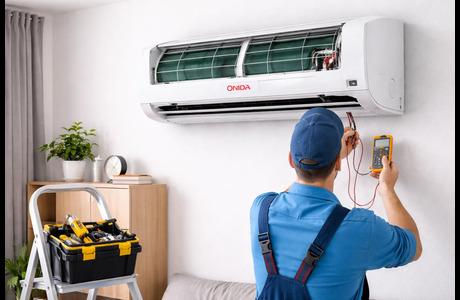
Frequent trips of the circuit breaker suggest an overload; disconnect other devices and test the air conditioner on a separate 15A circuit. A failing fan capacitor may produce a humming noise even when the fan is not spinning. Check for burn marks to determine if a replacement is necessary (costing around ₹500 for parts). Flashing patterns on PCB LEDs can indicate specific faults; for example, E4 often points to issues with the outdoor unit thermistor, which can be resolved by inspecting the wiring.
Does AC temperature affect power consumption? Yes, lower settings can increase power draw; 24°C is the most efficient for variable-speed operation. AC technicians normally highlight the importance of grounding for surge protection.
Frequent circuit breaker trips in inverter split AC units often relate to unstable grids; this is usually caused by compressor inrush currents that overload circuits. Wiring that is too thin (less than 2.5 sq. mm) can overheat, simulating faults. Capacitors that help manage startup surges also tend to fail first.
The solutions include upgrading to 20A MCBs and using 4 sq. mm copper wires for 1.5 ton split AC 3 star systems. Voltage stabilisers (170-270V) can help smooth out the inverter's load demands. Clean condenser fans to prevent overheating that can trigger trips.
Earth leakage circuit breakers may trip due to moisture-related faults, so ensure indoor units are dried thoroughly after cleaning. Onida recommends using surge protectors priced around ₹2,000 to prevent PCB damage, which can cost over ₹15,000.
DIY diagnostics can help resolve cooling issues with your split inverter air conditioner. First, check the filters; a clogged mesh can reduce airflow by 70%. Wash them weekly during the monsoon season. Also, verify the drain pan; using vinegar can help clear algae blockages that cause overflow.
Thaw any frozen coils by running the system in fan mode overnight. Check for debris around the outdoor unit; clogged fins can cause increased head pressure. Hose them down horizontally. If you hear hissing from gas leaks, apply soapy water to joints; bubbles indicate leaks that need to be sealed.
Use the Onida app for remote diagnostics to identify sensor issues. For persistent problems, consider hiring a professional with pressure gauges to check refrigerant levels.
Inverter ACs generally provide 30-50% energy savings compared to non-inverter models through smooth modulation, which prevents high startup energy use. They operate more quietly, cool faster, and can prolong the compressor's lifespan by 50%. Among popular air conditioners, inverter ac models are preferred for handling variable workloads.
Non-inverter ACs are suitable for infrequently used spaces; they have a lower initial cost (about ₹5,000 less), but may result in higher electricity bills. Inverter models are better for daily use with a split AC 1-ton system, providing a return on investment in approximately 1.5 years.
A 1.5-ton split AC 3-star rating provides a balance between cost and savings (ISEER ~3.8) and is suitable for moderate use. An AC 2-ton split 5-star rating (ISEER 5+) significantly reduces power consumption for demanding needs, lowering bills by 25%. The additional ₹8,000 for a 5-star model is recovered within less than two years.
A 3-star air conditioner is adequate for small rooms, while a 5-star model performs better in larger or hotter spaces. Onida's range of inverter air conditioners includes both options, enabling operation without a stabiliser.
Prevention is crucial for maintaining your split AC. Vacuum the filters every two weeks and clean the coils quarterly. Top up the gas and flush the oil annually. Keep the outdoor unit shaded from direct sunlight. Proper care helps maintain the split AC price in India, with maintenance logs showing diligence. Onida Care plans can streamline these tasks.
Dirty filters, low refrigerant levels, coil icing, and PCB trips are common issues, often caused by dust and grid problems. Regular cleaning every quarter can reduce service calls by 70%.
Inspect for blocked filters or low refrigerant levels. Clean the filters, thaw the coils, and look for leaks. If necessary, get professional assistance to recharge the refrigerant.
Overheating, low oil levels, and voltage surges are common causes. Stabilising voltage, cleaning coils, and performing annual oil checks can help prevent most failures.
Why does inverter AC trip frequently and how to stop it?Common causes include overload and faulty capacitors. Consider upgrading the wiring and MCB, and adding a stabiliser for smoother operation.



Please dispose of e-waste and plastic waste responsibly.
For more information or e-waste pick up, please call 7490 9555 55 or
click here for more details.