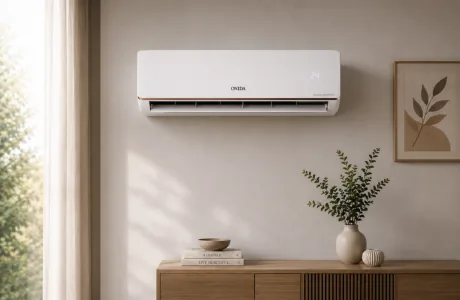

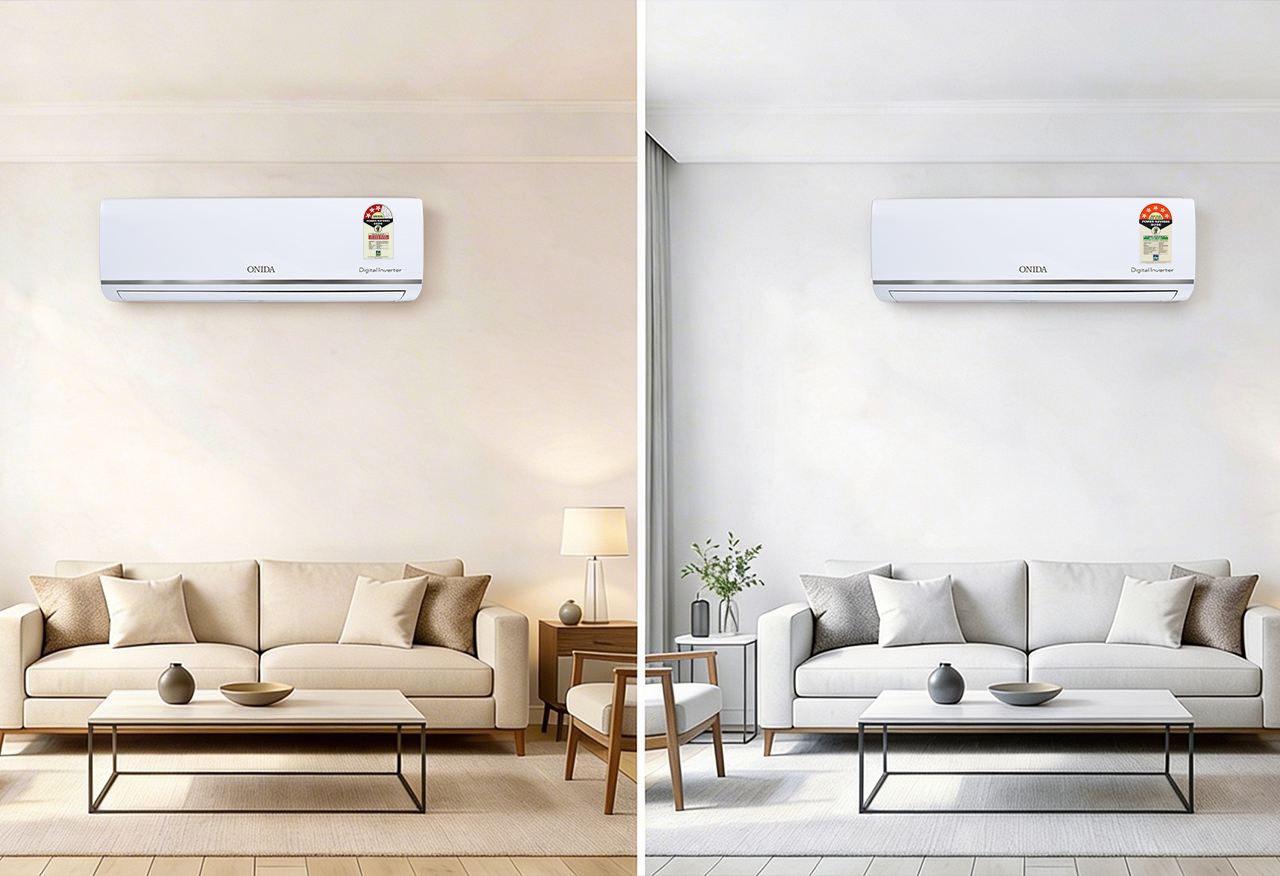
During India's sweltering summers, picking the right air conditioner means balancing comfort with wallet-friendly electricity bills. Onida, a trusted name in home appliances, dives into the 3 star vs 5 star AC debate right here, unpacking the difference between 3 star and 5 star AC to show which rating truly saves more electricity. Whether you're leaning towards a 3 star AC for upfront savings or a 5 star AC for lasting efficiency, this guide covers power draw, inverter tech, and real-world bill impacts.
We'll spotlight why 5 star inverter AC models edge out 3 star inverter AC rivals, pit popular picks like AC 1.5 ton 3 star against AC 1.5 ton 5 star, and tackle head-on queries like "3 star or 5 star AC, which is better?" Backed by solid facts on ISEER ratings, yearly cost gaps, and if the 5 star AC price 1.5 ton pays off, Onida delivers straightforward, data-backed tips for your next buy.
Star ratings from India's Bureau of Energy Efficiency (BEE) gauge an AC's energy efficiency on a 1-to-5 scale, with more stars meaning less power is used to achieve the same chill. A 5 star AC uses significantly less electricity than a 3 star AC, thanks to sharper compressors and tweaks that boost efficiency. The heart of the 3 star 5 star AC difference? ISEER (Indian Seasonal Energy Efficiency Ratio): 3 star AC hits 3.10-3.49, while 5 star AC clears 3.70+.
These numbers forecast your bills over time. Take an AC 1.5 ton 3 star: it pulls 1,100-1,500 watts. Swap to an AC 1.5 ton 5 star, and you're at 800-1,000 watts. Onida stocks both, blending reliability with choices for tight budgets or premium needs.
In the 3 star vs 5 star AC showdown, energy use, steady cooling, and durability steal the show. 5 star AC rocks inverter compressors that ramp up or down smoothly, slashing wear versus the on-off grind of many 3 star AC units yielding 20-30% less power for 5 star inverter AC heroes.
5 star ACs use inverter compressors that automatically adjust their speed based on the room temperature, which reduces electricity consumption.
| Feature | 3 Star AC | 5 Star AC |
| ISEER Range | 3.10-3.49 | 3.70+ |
| Power Use (1.5 Ton) | ~1,100-1,500W | ~800-1,000W |
| Annual Savings Potential | Moderate | 20-30% more |
| Best For | Occasional use | Daily/heavy use |
Picture this: a 3 star AC chews 1.2-1.5 kWh hourly on a 1.5-ton at peak, per BEE norms; 5 star AC trims to 0.9-1.2 kWh. Run an AC 1.5 ton 3 star 8 hours daily? That's 360 kWh monthly. A 5 star AC? 288 kWh. Yearly (1,600 hours), save 900+ kWh.
Inverters supercharge it: 3 star inverter AC cuts 10-15% off non-inverters, but 5 star inverter AC nails 25-35%.
5 star AC price 1.5 ton? ₹38,000-₹45,000. AC 1.5 ton 3 star? ₹31,000-₹36,000—₹7,000-₹10,000 extra upfront. At ₹8/kWh average, 5 star AC pockets ₹2,000-₹3,500 yearly on 1,600 hours. Break-even? 2-3 years, then gravy.
Onida's best AC 1.5 ton 5 star like IR185VITN boasts 5.2 ISEER, anti-rust coils users log 28% savings over 3 star ac.
3 star inverter AC tweaks speed decently, but 5 star inverter AC shines with brainy controls and top ISEER. On 1.5-ton, 3 star saves 20% over fixed-speed; 5 star AC? 30-40%, BEE-tested.
Onida's inverters narrow the 3 star 5 star AC difference smartly, with 5 star AC AI frost tech for humid haunts.
Tiny rooms (120 sq. ft max)? 3 star AC 1-ton for rare runs; 5 star dodges bill shocks. 150-180 sq. ft? AC 1.5 ton 3 star minimum, 5 star AC for routines. Big spaces? 2-ton 5 star AC rules.
Does star rating affect cooling performance? Nope, efficiency only, not chill power. Match tonnage, get equal speed.
5 star AC wins for heavy use 20-30% savings, tougher build. 3 star AC fits light, cheap needs.
Difference between 3 star and 5 star AC: 5 star AC boasts higher ISEER (3.7+ vs 3.1-3.5), fewer kWh, and slicker inverters.
5 star AC for small rooms bill-friendly steady cool. 3 star AC is ok, but pricier long-haul.
Yep, 20-28% vs 3 star, BEE-backed ₹3,000/year on 1.5-ton.
Seasonal efficiency metric (cooling kWh per input kWh); 5 star 3.7+ rules.
For 8+ hours/day, yes: ₹2,500+ in yearly savings are recouped in 2-3 years.
₹2,000-₹4,000 on 1.5-ton, ₹8/unit, 1,600 hours usage tweaks it.
₹5,000-₹10,000 on 1.5-ton; 5 star AC price 1.5 ton ₹38k vs ₹32k 3 star.
5 star AC top savings, stamina for "3 star or 5 star AC, which is better" daily.
5 star trims 25% (~₹2,500, 1.5-ton): 720 kWh vs 900 kWh yearly.



Please dispose of e-waste and plastic waste responsibly.
For more information or e-waste pick up, please call 7490 9555 55 or
click here for more details.